

Is Your Online Crush Real? A Step-by-Step Verification Guide (2026)
Use public-web checks, reverse face search, and source-page review to figure out whether someone you met online is real before trust outruns verification.
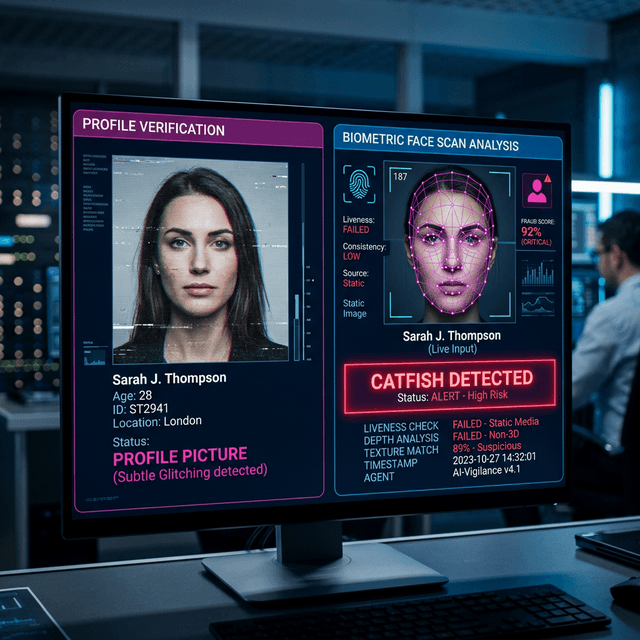
The Short Answer
If you are asking whether your online crush is real, the safest answer is: slow down and verify before you get more emotionally invested. Do not rely on chemistry, one profile photo, or one match score on its own.
A good verification workflow usually combines four things: a clear photo, a reverse image or reverse face search, careful review of the original source pages, and some form of live verification such as a video call. Each step gives you more context. None of them is perfect by itself.
221B is designed for the public-web part of that workflow. It can help surface publicly available pages where the same face may appear, but the original page context is still what tells you whether the result matters.
Before You Start: What You Actually Need
Start with the basics instead of jumping straight to conclusions. Gather:
- One clear photo: a single visible face with decent lighting works best.
- Basic profile claims: name, city, job, school, age range, or any timeline details they have already told you.
- A calm mindset: the goal is to compare public clues, not to force a verdict from one detail.
If you already feel rushed, confused, or pressured, that is part of the signal. Verification works best when you stop reacting to urgency and start checking what can actually be confirmed.
Step 1: Run Both a Reverse Image Search and a Reverse Face Search
These two tools do different jobs.
- Reverse image search is useful when someone reused the exact same picture or a slightly edited copy.
- Reverse face search is useful when the same person may appear across different photos on public pages.
Use both if you can. Start with the clearest photo you have. If you use 221B or another public-web face search tool, treat the result list as a set of leads to inspect, not as an answer on its own.
- Upload one clear image.
- Open the most relevant-looking matches first.
- Save any source pages that seem to point to a real identity trail.
No result is not proof that someone is fake. Some people have a smaller public footprint than others. The useful question is whether the overall story becomes more or less believable once you compare the available public clues.
Step 2: Open Every Source Page and Read the Context
The source page matters more than the fact that a match exists. When you open a result, check:
- Name and username: do they line up with what you were told?
- Dates and activity: does the account or page look current, abandoned, or copied?
- Surrounding context: bios, captions, comments, tagged people, and timestamps often tell you more than the face alone.
A real profile can still be thin. A fake one often falls apart when you try to connect the face, name, timeline, and surrounding context into one coherent story.
Step 3: Compare the Public Identity Clues
Now compare what they told you with what public pages suggest:
- Location: does the city or country make sense across profiles and timestamps?
- Work or study history: does it feel plausible and consistent?
- Friend graph: do they look embedded in a real network, or strangely isolated?
- Photo pattern: are all the images polished profile shots with very little everyday context?
You are not looking for one dramatic contradiction. You are looking for whether the identity feels more solid as you add evidence, or more fragile.
Step 4: Ask for Live Verification If Doubt Remains
If the public-web checks still leave you uncertain, ask for a respectful live check.
- Ask for a short video call instead of endless texting.
- If that is not possible, ask for a fresh photo that fits the moment, such as holding up the current date.
- Pay attention to whether the request gets a normal response or endless deflection.
Step 5: Know Which Red Flags Matter Most
The most important warning signs usually appear as a pattern:
- The story keeps changing in small but important ways.
- They resist verification but keep escalating intimacy.
- They try to move you into secrecy, urgency, or guilt.
- Money, favors, or emotional pressure appear before trust is earned.
If those signs start stacking up, treat that pattern seriously. You do not need a courtroom-level case to slow down or leave.
Final Take
If you want to know whether your online crush is real, the safest mindset is simple: verify early, not after you are already committed.
Use reverse face search and reverse image search to surface public clues. Then read the original source pages carefully, compare the identity story across platforms, and ask for live verification if you still have doubts. The answer usually becomes clearer when you stop treating one photo like proof and start treating the whole story like evidence.
If you want a workflow-first explanation of how 221B frames search scope and result review, read the methodology page and the guide on how to find someone by photo.
Frequently Asked Questions
What should I do first if I think my online crush might be fake?
Start with a slower pace, one clear photo, and a public-web verification check. Reverse image search, reverse face search, and source-page review are usually the most practical first steps.
Does no result mean the person is fake?
No. Some people have a smaller public footprint than others. No result is only one signal. The question is whether the full picture becomes more or less believable once you compare all the clues you do have.
Should I trust a high-confidence face match?
No. A match should be treated as a lead to investigate, not as proof. Open the original page, compare names and timelines, and verify the surrounding context before you decide what the result means.
Is it okay to ask for a video call or a fresh photo?
Yes, if you do it respectfully. Live verification is a normal safety step when trust is still being built and the story does not fully add up.
What matters more than any single tool?
Pattern recognition. Inconsistent stories, resistance to verification, emotional urgency, and money requests together usually tell you more than one dramatic search result.
Tags
See what a 221B result looks like first
Review a sample report before uploading your own photo. The useful output is source-page context, not an automatic identity claim.
View a sample reportRelated Articles
How to Find Someone by Photo: 7 Safe Steps (2026)
Learn how to find someone by photo safely using reverse image search, reverse face search, source-page review, and a verification-first workflow.
💘Reverse Face Search vs Image Search for Dating Verification
For dating verification, reverse image search helps find copied profile photos, while reverse face search helps find the same person across different photos. Learn when to use each.
🚩5 Dating Red Flags in Men & Women You Should Never Ignore
The 5 biggest dating red flags in men and women: love bombing, mixed stories, control, boundary pressure, and money asks. How to spot them early and what to do next.